|
December 30th, 2003 |
|
|
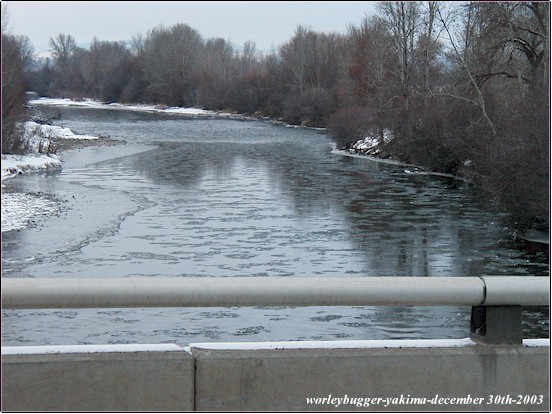
As the final day of two thousand and three
approaches, frigid, winter weather has placed a strong hold over the
Northwest. The air temperature strains each day to climb to
the twenty degree mark throughout the Yakima River Valley.
Large amounts of slush ice have formed in the majority of the main
stem of the river. Floating slabs cover the majority of the
rivers surface, creating a problematical experience for any
fishermen, especially those with flies.
|
|
|
|
|
|
|
|
 Click Each Thumbnail To Enlarge
 |
 |
Yakima River
December 30th |
 |
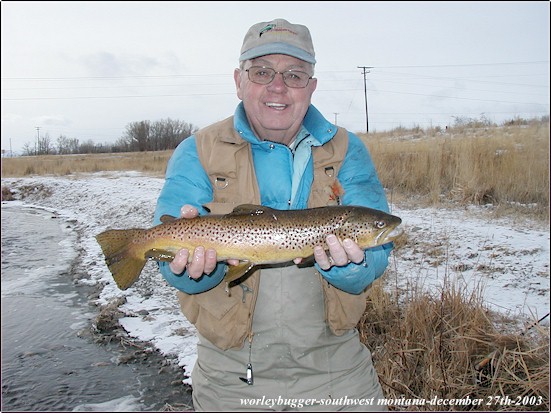
SW Montana
Brown Trout December 27th |
 |
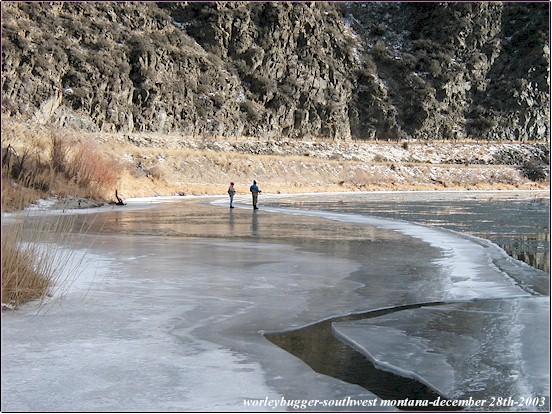
SW Montana
River December 28th |
|
|
|
|
Waiting patiently to cast between each slab of ice as
it makes its way down river is your only chance to present your
imitations to a hungry participant. Weather forecasters aren't
predicting a change in temperatures or conditions within the week.
If predictions ring true, don't anticipate conditions on the Yakima
to improve anytime soon. |
|
|
|
As we enter the beginning of a new fly fishing
season, the staff, management and family of Worley Bugger Fly Co.,
would like to thank everyone that has supported
our efforts. With your help, we have built and maintained
Central Washington's most respected fly fishing establishment.
We look forward to serving you in the 2004 season and wish everyone
a happy and safe new year! |
|
|
|
|
|
What a difference a week can make. As the eve
of Christmas draws closers, Central Washington's Yakima River is
experiencing a surge in aquatic insect activity. A major
migration of
stonefly nymphs
is now occurring. Unbelievable numbers of smaller stonefly nymphs
are congregating along the banks of the river. Exposing rocks
and other miscellaneous materials will uncover these sub aquatic
creatures. The resident fish
are well in tune to this passage and are taking full advantage of
this winter time feast, foraging whole heartedly throughout the day. |
|
|
|
Does this mean the Yakima will experience a hatch of
adult stoneflies anytime soon. Most likely not. Cold
water temperature ranging in the mid 30's will delay that
metamorphosis until early spring. However, if water conditions
and flows remain within the normal operating range throughout the
rest of the winter, expect some good early season fishing in "04". |
|
|
|
Large schools of Whitefish are also podded into the runs with the Yakima's rainbows. While nymph
fishing you will at times encounter these pods. They can be difficult
to catch due to their small circular mouth, especially with larger
flies. This time of year
they come readily and are especially attracted bright, colorful flies.
Wading through the Whiteys some days is the game
that you play. |
|
|
|
|
|
It's hard to believe that the month of December has
arrived and the pages on the 2003 fly fishing season are in its final chapter.
However, don't let that fact fool you. Winter is seeping into the
valley, some days bringing snow and colder weather, however this hasn't
deterred fly fishermen from the water's of the Yakima.
Despite the cooler weather, most days are providing sun filled
skies. The rivers colder water and the lack of
a major insect emergence, with an exception of our afternoon midge
hatch, hasn't kept the fish from cooperating.
|
|
|
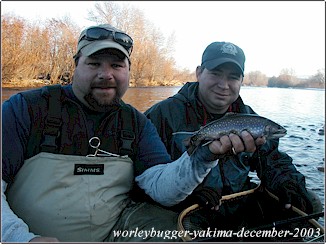 |
They are still there lying in wait, willing to eat a fly during the
warm part of the day. Many local area fly
fishermen you don't see during the warmer months, converge on
the river and find this time of year their favorite to fish the
Yakima. Solitude abounds except maybe a Bald Eagle
occupying a nearby Cottonwood tree or a herd of Big Horn Sheep
grazing on the sloping hillsides of the lower canyon.
For those looking to sharpen the skills of the
dry fly, the river is producing a modest Midge hatch.
Commencement begins in
the early afternoon, lasting into the latter portions of the
day. Long, delicate leaders with tippets of 6x are
perquisite. Attached at tippets end, a fly no bigger than a 22.
The smaller the better for this match the hatch fishing. |
|
 Yakima River Main Stem Brook Trout-December 2003 Yakima River Main Stem Brook Trout-December 2003 |
|
|
|
|
|
Those not prone to the purist portion of the sport
can be successful with a variety of nymph combinations. Beaded
Stonefly nymphs, attractor nymphs or your favorite soft hackle will
suffice. With an meager insect emergence at this time, the
presentation is most important. Despite the finicky
nutritional regime of a river rainbow, this time of year that don't
have the leisure of picking and choosing. If it looks like
food....they'll eat it. Their only demand is it look nature
and be presented within their holding column. |
|
|
|
The Yakima did has experience a resurgence of
water flows last weekend, however despite the increased flows, water
clarity remained clear. The river is in excellent fishing
condition and dropping daily.
|
|
|
|
|
|
After a week of unusual weather reeked
havoc across
the eastern areas of the state, Central Washington's Yakima River
is dropping quickly after reaching summer time flows. Large amounts
of water were pushed into the system via the Teanaway River and
other high land tributaries as low lying snows gave way and melted
quickly. Thanks to our cooling temperatures and drier conditions,
water flows are rapidly withdrawing from her banks. Water
temperature and stabilization of the river will begin once flows
drop back into normal pre-winter flows.
|
|
|
|
Before the mid November blow out, nymph
combinations the majority of the fishing day
were most productive. At the warmest point of the afternoon,
midge and tiny Baetis casting could be accomplished in particular
sections of the river. Concentrate your dry fly efforts in the
slow tail-outs, where the sunshine has the most potential to heat
the water during the day.
Rocky Ford Creek in the
Eastern Basin continues to fish well. A variety of imitations
and techniques are producing fish at this time. The "Ford" can
get busy this time of year, so if you are in search of fishing
solitude don't expect to find it there. |
|
|
|
|
|
Cool, crisp mornings have quickly
developed as the valley received it's first dusting of snow, lightly
blanketing the surrounding hillsides. Most of the evidence
that winter is not far from its arrival has quickly disappeared
under the Central Washington sunshine. The indication that the
seasons are changing lies at the higher elevations as the snow
capped peaks of the Cascades tower over the Kittitas Valley. |
|
|
|
Does this mean fishing has went south on
the Yakima? Hardly. No need to hit the water early this
time of year. You will spend most of the morning cracking ice
formations from your rod guides. Let the valley sunshine begin
to thaw the surroundings and warm the water a bit before venturing
out. The WBFC guide service has changed modes and is currently
conducting "Half
Day" trips on the river through the month of February "04".
Concentrating your efforts during the peak parts of the day is most
productive. One can expect good to fair Baetis hatches during
the afternoon most of the month. |
|
|
|
This past Saturday, the sixth annual
Yakima River Clean Up was held. Garbage was
collected from Thorpe to Roza Dam by over 70 fellow Yakima River fly
fishers. Thanks to everyone that took the time to attend and donate
their efforts for the day. We would like to thank the
Yakima River Fly Fishers, the
NW Women Fly Fishers, and
Reds in the Yakima Canyon for there participation once
again this year. |
|
|
|
On a bit lighter note, long time friend
and guide,
Luke Scarola has found the catch of his life, (Katie) and will
be married early next spring in his hometown of Goldendale. Luke
and Katie have moved to Alaska to begin their new life together.
Everyone here at Worley Bugger wishes them the very best and will
miss them. Luke was an superb guide for WBFC and will be
missed by many. Our days spent fishing the Klickitat is not
something I will forget. Luke, unlike others that started
their guiding careers at WBFC always conducted himself with honor
and integrity. For that Robin and I thank you. They can
never take that from you bud! Good luck to you and yours my
friend in your future endeavors! |
|
|
|
|
|
As the Fall season bores deeper into the
Kittitas valley, luminous colors cast an incredible hue of light
along the river bottom. Cumulus cover provides ample
feeding opportunities for Yakima rainbows as a congregation of
aquatic insects emerge. Dry flies, emergers and nymph
imitations will exhibit an importance during the day. Be
prepared, as you encounter Baetis mayflies and sporadic blooms of
caddis. Occasionally, intermittent rain showers dust the low
lying hillsides with a thin layer of moisture. |
|
|
|
The month of October is providing a
diversity of fishing opportunities for our guests. Steelhead in the
Klickitat and Methow Rivers, resident rainbows in the Yakima and
still-water trout at Blackstone and Baseline Lake, offer new and
exciting challenges each day. The "Klick" continues to flow
dark with less clarity than a glass of chocolate milk. The
Methow River, north of Chelan has dropped quickly and clarity has
returned, but continues to flow cold and fast. According to
river biologist that track steelhead by telemetry in the Methow,
fish were dispersed over a 3 mile range as the river swelled to over
8000 cfs last week. |
|
|
|
This Saturday, November 1st, the
"Yakima River Clean Up Day"
will be held. For details, please refer to the links below.
Because of the size of the event, please pre-register before the end
of the month. If you have never participated in the day or
have questions about the event feel free to call the proshop. |
|
|
|
|
|
|
|
|
|
Beautiful Fall days flowing with cloud
cover, sunshine and a background of color painted as only Mother
Natures hand can do, is now occurring. The brilliant red
foliage and golden cottonwoods create a brilliant landscape along
the river. As west-side rivers bulge from record rain fall,
Central Washington's Yakima River remains unaffected by small,
intermediate rain showers that have converged over the Kittitas
Valley throughout the week. The Yakima's reservoirs control
the majority of river flow this time of year. Rarely is the
Yakima effected during the Fall season by rain showers.
|
|
|
 |
A slight increases in flows did
occurred the past couple of days, however the river remains in
excellent fishing conditions. River flows had swollen on
the steelhead streams of the Klickitat and
Methow rivers as well, however the drier weather now has
them receding quickly.
Baetis, Mahogany Duns and Lt. Cahills continue to be the trout's
main focus throughout the day, however certain area's of the
river are seeing good numbers of October Caddis as well as
smaller tan Caddis. Pupa's, rock worms and emergers have
all worked well. |
|
"Yakima
River Fall Baetis" |
|
|
|
|
|
|
A swiping change is occurring across the
Yakima River Valley as we welcome the cooler temperatures.
Fall weather it looks has finally started to settled in. The
warm, summer days of September are now replaced with mild, sunny
Fall fishing days. As the lowland Elk herd concludes their
rutting season, territorial bulls can still be heard bulging along
the river in the cool, early mornings. The Big Horn Sheep are
returning from summer feeding grounds to winter in the hills of the
lower Yakima River canyon. If your lucky you may witness a
clash or two between rival rams, in conflict for natures
procreations during your fishing day. |
|
|
|
The Fall Baetis beginning their daily
emergence during the first part of the morning and as the day
progresses, Mahogany Dun Mayflies and Light Cahills will begin
appearing. In areas of the river, where this hatch is prolific
rainbows will turn there attentions from Baetis to these larger
aquatic mayfly forms. Afternoons can produce a cool breeze,
which at times can impede the emergence. During these times
sub aquatic or emerging patterns fish in the film tend to be much
more productive than the actual dun imitations. |
|
|
|
Fall Caddis, October Caddis or Halloween
Caddis, which ever term you are familiar with are apparent
throughout the main stem of the Yakima as well. Hatches of
this giant Caddis can occur at first light or at times sporadically
throughout the day. However, hold out for the most profuse hatch,
will occur late in the day as the sun slowing sinks over the western
landscape. Skating big dry fly patterns will arise attentions.
Larger rainbows will often times break the surface for a chance at
this large meal. |
|
|
|
|
|
With the onset of October, factors that
a Yakima fly fishermen may have not considered throughout the
previous month, begin to take effect. During September, the
summers Stonefly hatch was in full swing with fish chomping egg
laying adults and gorging on large, migrating nymphs. With
warming temperatures this past week, the stonefly activity was
peaking in areas of the river. Large females in good numbers
were attracting the attentions of the resident wildlife. Those
that weren't bombarded in the air by Swallows, fell prey to the
rivers rainbows. If encounters with these large Stones didn't
occur, the Fall Baetis were most likely a factor. |
|
|
|
An emergence of Blue Wing Olives is
occurring daily throughout the Yakima. Each day provides a
distinct experience with some mornings and early afternoons
producing dense hatches of these dun winged mayflies. Sizes
range anywhere from 18 to 22. This can be technical fishing.
Long, thin leaders, delicate casting and presenting the imitation
with a drag free drift if crucial for success. For those that
can accomplish this task, rewards abound. The Yakima will bestow a
humbling experience if these requirements are not performed. |
|
|
|
With warm days as well as warm water
temps, the fish are active. Some days, a diverse emergence of
aquatic mayflies will congregate throughout the main stem of the
river. Mahogany Duns and Lt. Cahills will also make an
appearance during the day. These are larger Fall mayflies,
however the same skills are required when fish turn their feeding
attentions to this fare. |
|
|
|
In the evening, as the planet Mars beams
rays of light throughout the southern sky, Fall Caddis begins their
nightly emergence. The daily dance of these large, Halloween
Caddis turn the slow, Baetis sipping rainbows to near insanity as
the frenzy begins. These large, moth-like looking creatures
begin appearing and imitations that reflect the natural are attached
to tippet. Leave the river before dark and you will most likely not
experience the feeding phenomenon. |
|
|
|
With the drop in water flows during the
month of September, the kings of the river, Yakima Chinook Salmon
have taken up areas of the river bed and have actively been building
spawning redds. With returning numbers quite lower from the
previous two years, the largest concentration this season is in the
upper portions of the Yakima. |
|
|
|
|
|
|
|
As the days of summer rapidly depart,
convincing indications that the inevitable metamorphosis that occurs
each year is beginning to illustrate its personality throughout the
Yakima River valley. The sweltering days we experienced have been
restrained and are now replaced by warm, comfortable temperatures.
Frosty mornings and cool evenings are a welcome change, following a
scorching summer that left its mark across the Northwest. The
reappearance of aquatic insects that have been dormant for months
are presenting themselves as fair to the Yakima River rainbows. |
|
|
|
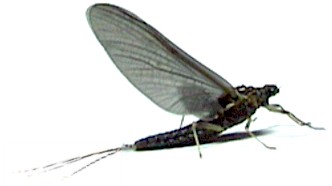
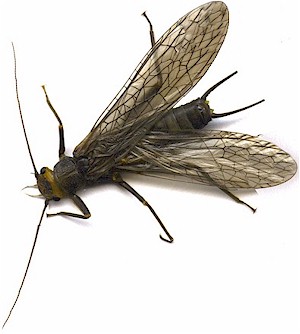
Shortwing Stoneflies, Fall
Baetis, October Caddis and sporadic emergences of
Mahogany Duns and Lt. Cahills Mayflies are in full swing
at this time.
Several cloudy, overcast days have presiding over the
valley, making it an ideal time to fish the mayfly
emergence. Other days, the famous Central
Washington sunshine abounds and fish become less
reluctant to raise, seeking the safety of a camouflaged
river bed.
An unusual amount of wind
has also raised it ugly head |
 |
over the past week like it
will do at times in this part of the state, making
fishing, casting and rowing a bit more challenging.
An expected change in weather patterns is predicted and
the usual "Fall" days will begin.
The river conditions are low and are now at anticipated
Fall flows. Wading the river through the majority
of the main stem can now be easily accomplished.
However, strong summer volumes of water still create
deep ledges and pools, which one must be aware of.
Slick, weedy rocks can also be tricky, so a wading staff
can help. |
|
"Yakima River Shortwing Stonefly-Female" |
|
|
|
|
As the cooling trend continues,
the reopening of
Blackstone and
Baseline Lakes will occur next week. Both
lakes are producing hatches of Calliabeatis as gulping
rainbows are slurping spinners from the surface during
the latter part of the day. Smaller Damsel flies in
both nymph and adult are still forage along with large
Dragon nymphs smaller terrestrials and fat Hoppers.
Please call ahead this Fall for availability. |
|
|
|
|
|
The invasion continues...!
Shortwing Stoneflies mass along the banks of the Yakima as males and
females perform natures interactions. Fertile egg laying females are
now taking flight over the water, depositing their dark egg sacks
before being devoured by foraging rainbows . Water flows have
dropped steadily over the past week. Central Washington's
trout stream has taken on the appearance of a free flowing river as
"Fall" fishing commences. Those that have been away from it's
fast and furious waters during the summer will now find the river
easily accessible throughout most of the main stem. |
|
|
|
Several new aquatic insect
hatches that have been absent for some time are now
beginning. The past several days, Fall Baetis-(Blue
Wing Olives) have been
reappearing throughout sections of the lower river.
Upon close inspection, one will find a diverse assortment of
free floating nymphs, dead drifting through varied levels of
the river. Small trailers attached behind a large
stonefly imitation can be productive during these cycles.
|
|
|
|
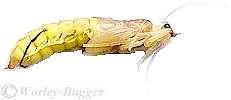
The river's "Fall Caddis" or "October Caddis, which
begin pupation during the mid August are now hatching in
the latter parts of the day. As the Fall
months progresses, this large aquatic food source
becomes highly important for building food reserves for
the winter. Because pupation of this insect begins
during times of high water, thousands are stranded in
the rocks along the banks of the river, left high and
dry. |
 |
|
"Yakima October Caddis Pupa" |
|
|
The large orange caddis that
were fortunate enough to build their pebble encrusted cocoon
casing in deeper water will continue to emerge throughout
the next several months. Because of the "flip-flop",
certain sections of the Yakima will experience better or
intense hatches of these insects. Upper portions of
the river always produce good numbers of Fall Caddis.
Be prepared with both adult and pupa patterns during your
day. |
|
|
|
|
|
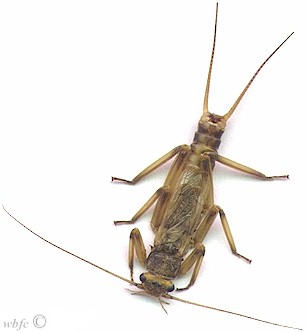
As the river continues on its annual
descent, the major migration of summer stoneflies is intensifying.
Short-wing Stonefly casings are evident, covering the river rock
along the banks throughout most of the middle and lower sections of
the Yakima. The male (below right)
of this stonefly species is most apparent at this time. However, the
gigantic females will begin taking flight over the waters of the
river. As this occurs,
the larger of the Yakima rainbows will
take heed and turn their attentions to the surface. For now,
they are distracted by what is occurring beneath the surface. |
|
|
|
Thick, blankets of smoke have
settle in the Kittitas valley from the blazes burning in the
upper portion of our state and Southern Oregon. With very
little wind the past couple of days, the haze has provided
some morning and early afternoon relief from a hot, roasting
Central Washington sun. A reprieve from the hot
temperatures is coming! By Sunday, highs are expected
to reach the middle seventies as a storm front prepares to
move across the southeastern part of the state. |
|
|
|
|
|
Its the time of year once again we all
look forward to...water flows are dropping on the Yakima!
River volume has steadily decreased about a 100 c.f.s. each day for
the past week. The high water volume that has coursed through
the lower Yakima this summer is receding. The river is slowly taking
on a whole new look. The K.R.D. (Kittitas Reclamation
District) is expected to cut flow through the irrigation canal
system, shutting off water at the diversion dam by the second week
of September. Canals will dry up quickly after this and the "flip
flop" will occur. |
|
|
 |
Wading the lower sections of the river can still be a
challenge, so picking and choosing a section over the next
week for safety considerations is wise. Each passing
day, the river will become more accessible to those on foot.
Lower flows are beginning to
concentrate fish, aquatic life and smaller bait fish.
As this is occurring, different techniques and flies are now
providing a well rounded fly fishing experience.
Our summer insects hatches
are beginning to diminish and fade, however Yakima's Fall
insects are beginning to cycle as pupation of the
"Fall Caddis" is now commencing.
The river's most predominate
stonefly migration is now under way as well. The
Short-wing Stonefly exodus from river to stream bank is
occurring through the river system. Mating between
male and female stones is taking place.
|
|
"Male Short-wing Stonefly" |
|
|
As flows continue to recede, this
hatch of large aquatic insects will heighten, not peaking until
mid to late September. Fish will be gorging on both
nymphal and adult forms over the migration period |
|
|
|
Bookings for guided fly fishing
trips are now being accepted for "Fall" fishing on the Yakima
River as well as the private still water fisheries of
Blackstone and
Baseline Lakes. Days are beginning to fill quickly
for fishing at Blackstone in October. Make your
appointment early this year for the desired fishing date. |
|
|
|
The staff
and management of WBFC wishes everyone a safe and happy Labor
Day weekend! |
|
|
|
|
|
Although the high heat that blistered
the valley earlier in the month has dispersed, warm August
afternoons are still lingering in the Yakima River Valley. The
walls of the lower canyon radiate hot streams of air well into the
evening. The hillside that were once green with grasses now darkened
by fire or sunshine. The semi-arid desert landscape of summer
appears. At this time the Yakima is experiencing a idle change
in insect activity. As the afternoons come to a close and the
day begins to cool, August Caddisflies bloom in thick, grotesque
hordes. This is providing some good opportunities for late
evening dry fly fishing. |
|
|
|
During the day fishing attractor
patterns, Hoppers, or other terrestrial patterns will produce
results. Most of the fish will be in the smaller 8 to 10"
range. For larger fish, nymph fishing will generate a far
better outcome. For those that detest nymph fishing,
pitching streamers to bank feeders during the day has been good
through specific sections of the river. As the month
progresses and the water begins to drop, our summer stone-fly,
the "Shortwing Stones" will begin. This is the river's
most prolific hatch of large stones, comparable to the
Salmon-flies of the Deschutes or Big Hole rivers. Make
sure to get in on this exciting fishing opportunity. Those
unable to wade the river over the summer months will once again
be granted the ability as water flows will recede and a whole
new river will appear. |
|
|
|
|
|
After a week of hot summer weather, a
cooling trend is now providing a reprieve to those living in the
Central Washington Basin. As temperatures sky rocketed into
the triple digits last week, water temp's followed the same
direction despite the significant water flows in the Yakima. Most of
the smaller, feeder streams that provide water to the river
throughout the year have soared to dangerous levels.
Hopefully, the cooler weather we are now experiencing will provide
relief and we will begin to see a drop in the feeding streams water
temps.
|
|
If the hot weather isn't enough,
arson fires
sprung up around the Kittitas Valley
as well as the and Yakima River Canyon. Hillsides lit up
quickly as local fire crews worked tirelessly to control one
blaze after another. Local law enforcement officers have
several leads and are actively pursuing the perpetrators that
have little else to do with their time. |
|
Early mornings as the sun breaks over the eastern hillside
is providing fly fishermen with a chance at some good summer
fishing. As the sun
reaches its highest point for the day, fishing can slow.
Take a break, find a nice shade tree and wait for the
evening Caddis bite. |
 |
If your a die hard, concentrate your imitation in the
faster, cooler riffles of the river during this period.
Here, is one spot where you will find the Yakima's rainbow,
tucked up tightly during the heat of the day.
At this time the grassy, brushy,
banks swelling under the warmth of the valley |
| |
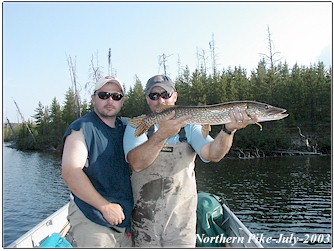
 Northern Pike-July-August 2003
 |
|
|
|
sunshine are also providing adequate
cover for several varieties of terrestrial and aquatic insects.
Hoppers, ants, and beetles just to name a few are taking refugee
along these areas of the Yakima. A slight valley breeze
during the day is providing the river's resident rainbows with a
summer time feast. Casting a variety of big bug imitations
in surface and sub-surface presentations to summer bank feeders
can provide some exciting fishing during your day. |
|
|
|
|
|
As the ashes smolder from Friday's
double
Taneum Creek Canyon, fire the heat set off
from the blaze produced a spectacular sunset for the weekend's
evening fishing in the upper city section of the river.
There is no shortage of water in the Yakima as flows swell to near
normal operating volume for the month of July. Morning and
late evenings are producing the rivers best fishing. During
the heat of the afternoon the rainbows are tucked up tight in the
fast, cool riffles of the river. Work each run with nymph
during this time for best results. |
|
|
|
Some sections are still producing an
afternoon P.M.D. emergence. If the afternoon wind remains
calm, one may happen to encounter this hatch and you then can
expect some surface feeding. The mayflies are beginning
their seasonal change as they develop a hue of brown to their
body color. A darker body color than previously used is
recommended for match the hatch fishing. |
|
|
|
Hoppers and other Terrestrials are
playing a important role in summer fishing. Bank feeder
are respective to these imitations when fished accordingly.
The valley winds are providing forage for the Yakima rainbows
and dry fly activity along the grassy, brushy banks for the fly
fishermen. |
|
|
|
|
|
Blistering hot, heat converges over the
Central Washington Basin as temperatures hover just below the triple
digits. Water flows are high throughout the major areas of the
Yakima's main stem, however the river continues to run below normal
volume for this time of year.
Early mornings are providing good fishing opportunities before the
afternoon sun settles high in the sky. Very little cloud cover
is available this time of year. For best results, concentrate
your imitations along the shady, brushy sections of the river during
the heat of the day. Working the fast, riffles of each run
with beads and wet flies will also provide plenty of subsurface
action. |
|
|
|
As the afternoon sun begins to
settle, summer Caddisflies make their appearance and trout can
be found holding in several different water types. Much
like every aquatic hatch that has occurred this season, the
early arrival of the Shortwing Stone to the waters of the Yakima
is also now happening in some sections of the river. These
large Stoneflies are creating some exciting summer fishing.
We may experience a slow in the progression of this stonefly
hatch through the remainder of the month. However, as the
middle of August arrives more of these summer stoneflies will
appear in large, dense numbers. Terrestrial activity is
also starting and drawing interest to fish along the grassy
banks of the river. Try your favorite Hopper pattern
during the day throughout these areas. |
|
|
|
The Worley Bugger fly shop will be
closed on Sunday, July 13th for the day. Family and
friends of WBFC will gather for a day of summer fun and feasting
at Safeco Field. The shop and guide service will once
again open under normal operation on Monday, July 14th.
Thanks to all for your support and patronage over the past 5
years! |
|
|
|
|
|
As the nation prepares for the upcoming
celebration of independence, water conditions have slowly began to
change throughout the Yakima River valley. Flows have been
gradually stepped up over the past couple of days. Stored
water from the
Cle Elum Reservoir has been released,
creating an increase in flow and volume. Water conditions,
including clarity have not been compromised. The river is in
excellent shape. Those that took advantage of last weekends
less challenging wading opportunities may find areas of the lower
Yakima inaccessible to them at this time.
|
|
|
 |
Feel free to call the fly shop for
current river conditions. The dry fly fishing as been sporadic
at best during the day. Bright, sunny skies have the fish
skittish in places. Areas of the river where trout have been
feeding on Golden Stone adults has produced some top water action.
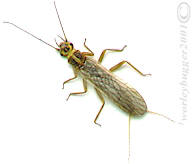
Yellow Sallie Stones (left)
are prevalent throughout many sections of the river at this
time. They have also provided some surface activity
during the day as well as the late afternoon P.M.D. Mayfly
emergence. Weather and water conditions have provided a new
set of circumstances each day. Terrestrial fishing is
also beginning and will play an important role during your
day of fishing the Yakima. |
|
"Yakima River Yellow Sallie" |
|
|
Those looking for surface feeding
rainbows, will find the early evening Caddis has been the most
consistent. As the heat of the day begins to subside,
summer Caddis begin their nightly dance along the brush and
grasses of the river. Here, evening temperatures provide
cool, comfortable opportunities. |
|
|
|
The Worley Bugger fly shop will be
closed on Friday, July 4th, in observance of Independence Day.
The staff and management will be enjoying the holiday with
friends and family. The WBFC operation will open once
again under normal hours of operation on Saturday, July 5th.
We wish everyone a happy and safe holiday weekend. |
|
|
|
|
|
Despite the blustering, Kittitas Valley
winds that have positioned themselves over the Central Washington
Basin this past week, the fishing has remained consistent.
Cool winds have kept the mid-day June
heat contained, creating an atmosphere viable for active trout and
insect behaviors. Caddis, P.M.D.'s, Golden Stones and Yellow
Sallies now constitute the majority of the trout's consumptions.
|
|
|
|
Selecting key spots on the river
during times of high winds can make your day much more
productive. Unlike the early spring winds that we
experience, the summer stream of air is now somewhat contained
in areas of the river by the thick leaves of the Cottonwood
trees that grow along the Yakima. The dense grasses and
brush that are popping up under the warm sunshine are also
creating some diversions. Wild roses and other indigenous
plant species are in full bloom along the banks and hillsides of
the river, creating a colorful, scenic tour throughout the day.
|
|
|
|
Water releases from the Cle Elum
Reservoir have gradually been stepped up over the past 3 days,
however the river remains in excellent condition. |
|
|
|
|
|
High heat pounded the Yakima River
Valley earlier in the week as north slope snow for the Cascades
melted quickly. With the Cle Elum Reservoir filled to
capacity, a release of water was flushed through the system.
As quickly as it was melting, the B.O.R. was discharging a large
volume of water. Out flow from the dam has gradually tapered
off. The natural flows from the Teanaway River have also began
to diminish. The Yakima Rivers conditions have greatly
improved over the past couple of days. Clarity throughout most
of the lower river has returned. |
|
|
|
Expect tea colored water throughout
the lower canyon section as local farmers start irrigating once
again. The first cutting of Timothy Hay was completed during the
week, so irrigating will begin again throughout Badger Pocket
area. Wilson Creek converges with several smaller streams at the
bottom of the Pocket. Wading anglers may find access to
most of the lower river difficult, even though flows have
receded. The upper Yakima above the Cle Elum confluence
has far greater wading access and insect hatches have been
consistent through this area of the river. |
|
|
|
|
|
|
|
|
|
As warming temperatures increased over
the state, late spring snow pack accumulations began to disappear
under the Kittitas Valley sunshine. North slope Cascades snow began
to quickly melt as tributaries of the Yakima began to swell and spew
cool, mountain waters.
An increase in water volume occurred
throughout the main stem of the Yakima late last week just in time
for the holiday weekend. Water clarity was only compromised
for a short period and by Sunday the blue ribbon trout stream had
returned to good condition. During the river rise, some
sections did fish, while others seemed absent of any activity.
|
|
|
|
Melting snow continues to drain into the
upper Yakima River reservoirs, however the last months snow pack
reserves are hardly enough to cause a high water year on the Yakima.
Water releases have so far been minimal from the storage facilities
and last report for the summer irrigation season was dismal.
The river and canals at this point are expected to operate at about
62% of normal. This is bad news for the farmer, but good news for
the Yakima River fly fishers. Water temperatures of course
could become an viable issue if summer heat becomes to extreme. |
|
|
|
A variety of insect emergence are
occurring throughout the river. Salmon flies, March
Browns, P.M.D.'s and Caddis are hatching in the section from
Easton to Cle Elum. The lower portions of the Yakima are
experiencing hatches of Caddis, P.M.D.'s, Yellow Sallie's, and a
mixture of Golden Stones. Water flows in the lower river
are making it more difficult on the wading fishermen.
Strong waders will find area's of crossing, however those not
comfortable navigating the higher water conditions may want to
work the upper sections of the Yakima where flows are far less
excessive. |
|
|
| This week, we
head east to join our friends at the "Montana
High Country Ranch" for 3 days of guided fly fishing
on the waters of the Southwest Montana.
The Big Sky Country is
experiencing the same weather patterns that are stirring
over Central Washington. |
 |
High heat is
bringing the flows on the Big Hole River up, but local
experts are predicting a crest in the next day or two.
We are all looking forward to the fishing and will be
spending our time on the Beaverhead River as well. The
fly shop as well as Worley Bugger's guide service will be in
full operation during my absence. |
|
|
|
|
The "Klickitat
Steelhead" steelhead season opens this Sunday, June 1st as
well and we are once again looking forward to the season on this
fabulous fishery. Luke Scarola, a native of this
Southeastern Washington Steelhead fishery will be leading our
guided fly fishing trips. 18 of his days are already
spoken for in the month of June. Please call ahead for
booking availability for the remainder of the month. |
|
|
|
|
|
Over the past week the Yakima river
basin has experienced rain showers, sleet, snow flurries and warm
sunny skies. Lower than normal spring flows are bringing the water
temperature up and producing hatches of insects like we have not
seen in quite some time on the river. Though it is the month of May,
water conditions look like Fall without the brilliant, bright colors
that are produced that time of year. This month the sunshine has
mixed with an abnormal amount of moisture and the vegetation has
begun to thicken and green throughout the Yakima River valley.
Through some sections, free floating nymphs are collecting along the
banks of the river. Golden Stones, Yellow Sallies are most
prevalent as they become the next source of subsistence for the
Yakima rainbow's
|
|
|
 |
The entire "Catch & Release section
of the Yakima river is experiencing a variety of aquatic insect
hatches. Those fishing the upper Yakima above Ellensburg
this "Memorial Day Weekend" will encounter hatches of March
Browns, Salmon Flies in both nymph and adult as well as Pale
Morning Duns during the day.
The "Upper Eburg sections are
seeing condensed insect occurrences throughout the day, but
this section is producing some of the
best fish the river has to experience.
The Lower Yakima Canyon is
producing intense hatches of Cadds and PMD throughout the
day
|
|
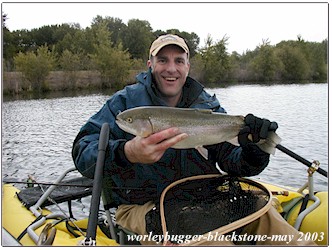
Blackstone Lake May 2003 |
|
|
|
|
This section of river is providing
plenty of dry fly fishing for those prone to this section of the
river. Releases of hatchery "Chinook salmon smolt have been
deposited into the Yakima River once again this spring. An
ink identification mark along side of the gill plate will easily
distinguish these "hatchery" raised fish from the wild trout
species. A progressive hatchery program has been under way
the past 5 years to re-establish runs of Chinook and Coho Salmon
to the waters of the Yakima. This identifying mark will
distinguish between the resident and the sea-going species.
As of today less than 800 both wild and hatchery salmon have
returned over the latter at Roza Dam this spring. The
number is down substantial in comparison to the last two years? |
|
|
|
|
|
|
|
The conditions continue to improve for
the fly fishermen of Central Washington's Yakima River as water
flows remain low. Wading fishermen can take advantage of the
low water and virtually move from bank to bank. Be careful of
the deep slots and ledges that are still present throughout the
river. Though water flows are
low, boating fishermen can still float the entire main stem of the
river. Obstacles and hazards that are usually hidden by higher
water flows are present and will have to be navigated carefully. |
|
|
| With
lower than normal flows, water temperatures are rising
quickly. This is producing a variety of aquatic
insects throughout the day. Caddis are definitely a
main stay in the diet of the Yakima rainbows, however
sporadic March Browns are still occurring throughout
specific sections of the river at this time.
|
 |
The
emergence of March Browns is thinning in the lower sections
at this time, however upper areas of the river are still
producing some decent hatches. The river is also generating
P.M.D. Mayflies and Yellow Sallie Stones throughout most of
the lower sections now, so be prepared to encounter these
aquatic hatches during your day of fishing. |
|
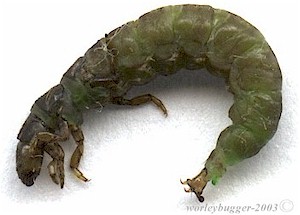
"Yakima River Rockworm Caddis" |
|
|
|
|
|
|
If you are anticipating the arrival
of this year's Mother's Day Caddis hatch to begin it's bloom
over the waters of the Yakima, then wait no longer. This
season, hatches of aquatic insects have been occurring weeks
earlier than expect and the Caddis hatch is no different.
Blooms of dark bodied spring Caddis are coming off in waves
throughout the mid-morning lasting well into the late afternoon
on Central Washington's Yakima River. Blooms are cycling
throughout the day and are occurring throughout most sections of
the river. The upper sections from Cle Elum through Bristle
Flats well through the city sections of Ellensburg to the lower
Yakima canyon are all seeing thick activity of spring Caddis.
|
|
|
|
Make sure you are equipped with
several variations of each stage of this insect. Rock
worm, sparkle pupa's, and egg layers will all be present
throughout your day of fishing. Another aquatic insect is
making a early appearance on the Yakima as well. Pale
Morning Duns Mayflies (P.M.D's) are also hatching on specific
sections of the river at this time. Most of the
concentration that we have seen has been in the lower sections
through town ranging well into some area's of the lower canyon. |
|
|
|
The giant Pteronarcys
Salmon Flies are also airborne over the waters of the Yakima in
the afternoon as well throughout specific sections of the river.
Those wading the river may or may not encounter a hatch of these
stoneflies. In fact, you may not encounter several of the
hatches. Those floating the river have a distinct
advantage over the wading fishermen. Floating allows you
to cover more water and fish productive hatches throughout the
day. Your encounter with March Browns, P.M.D.'s, or Salmon
Flies is a 50/50 chance.
The
river is in great condition, although we did see an increase
overnight in water flows due to some heavy thunderstorms that
moved through the valley late last evening. Expect good
fishing conditions for the weekend. |
|
|
|
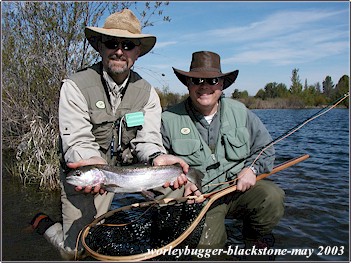
For those heading to the Stillwater's of Central Washington,
reports from the public fisheries has been good all week.
Reports coming into the pro-shop about Dry Falls continue to
be erratic.
Callibaetis, Damsels and
Chironomids are keeping fishermen entertained throughout the
day. The private fisheries of Blackstone Lake and
Baseline Lake, have
also been keeping fishermen busy.
Fishing is
very consistent
at both lakes at this time.
Several hatches of aquatic
insects are now occurring, providing a complete fly angling experience.
|
 |
|
Blackstone Lake May 2003 |
|
|
|
|
Damsels
(adult), Callibaetis, Chironomids and the Flying Ant Phenomenon is
occurring at
Blackstone now! If
you are planning to fish either lake this spring with us, please call
ahead. The lakes have a few remaining days for the month of May that
are available. Both lakes will most likely close for the summer
months the first part of June and will not reopen until early Fall. |
|
|
|
|
|
As the Yakima plummets to unusual low
levels for this time of year, conditions have never been better for
a day of spring fishing in Central Washington. The river is now
producing a smorgasbord of hatches. The probability of you
encountering any number of aquatic insects throughout your day of
fishing is now possible. |
|
|
|
Those dry fly enthusiast's that prefer casting surface imitation
to consistently feeding fish, can now satisfy your passion as
the March Brown Mayflies, Blue Wing Olives and Caddis continue
their afternoon emergence over the waters of the Yakima.
|
 |
The river continues to produce some Skwala Stones activity
as well. Fishing both the nymph and adult are still of
interest in some areas of the river.
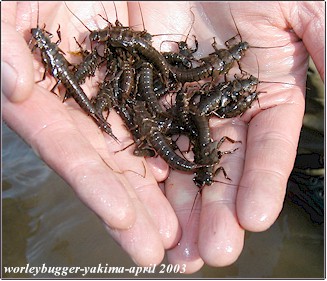
A massive nightly stonefly migration is now occurring
throughout specific sections of the Yakima as well.
The mother of all stoneflies, the Salmonfly (left) is making
it's yearly exodus from the river in search of dry ground.
Hordes of these large stones are converging along the banks
of the river in vast numbers.
Many become forage as they
make their journey along the bottom of the river. If
you had to imagine a migration of this magnitude and how it
relates to trout fishing and their dietary consumption,
think about it in these terms. |
|
Got
Stones? |
|
|
A 3" inch, dark, plump bodied insect
begins crawling along the river bed, perhaps hundreds of these
large stones all moving at a specific time, across the bottom in
one direction. Portions of the river bed must come alive
with activity during the darkness. Easy pickens and quite a meal
for any foraging rainbow.
The river,
the lakes, the spring creeks, whatever your preference,
are all fishing well. Their is no lack of fishermen,
especially during the weekends on most of the well know
fisheries. This doesn't mean an angler can't find a bit of
solitude among all the people. You may have to work a bit harder
to find it, but it's there. |
|
|
|
|
|
|
|
As a weekend of sunshine ensued, mixed
rain showers fell late Saturday night, lasting into the early
morning. Sporadic showers pounded portions of the valley on
Sunday, which also contributed to the increase in flows throughout
the main stem of the Yakima. The clarity was compromised
somewhat as flows increased throughout the river. However, it
did not deter aquatic insects from emerging in unison on the Yakima.
The river is producing March Brown Mayflies, Skwala Stones, Caddis
and Blue Wing Olives throughout the fishing day. |
|
|
|
With a steady increase in flows,
pods of fish were dispersed somewhat, but flows have receded
rapidly and schooling once again has taken place.
Conditions have improved greatly and the river is in!
Hatches are beginning
mid-morning as Blue Wing Olives and Caddis get the day
underway.
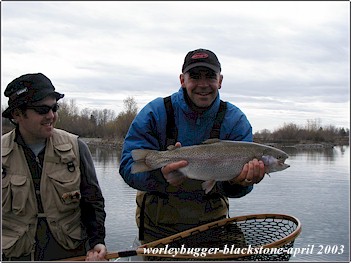
The March Brown emergence has
been erratic from day to day. We have observed it
beginning at 11:00 and last well past the noon hour.
However, some days it may only occur for a short time. Other
days the hatch will begin a bit later in the day.
|
 |
|
|
Blackstone Lake April 2003 |
|
|
|
Intensity of the hatch is also
dependant on flows, temperature and the concentration of
naturals in any given section of river at one time. If
this mayfly hatch occurs strong in a particular area one day,
the following day it may be less concentrated through that
portion of river.
The Yakima continues to drop and
will once again become much more accessible for those on foot.
However, the biggest draw back is making sure you are positioned
correctly to encounter the March Browns experience. Those
fly-fishers in boats have a distinct advantage and are able to
access portions of the river not easily obtainable on foot. |
|
|
|
|
Its the time of year once again that we
wait so patiently for. The sun blasting warm rays of sunshine
over the Kittitas Valley as a combinations of food sources present
themselves as fare to the Yakima River rainbows.
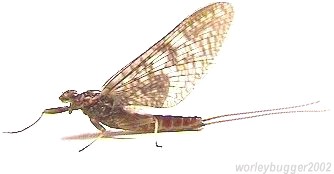
It's March Brown Mayfly time as the
afternoon waters of the river come alive with large, dark bodied
mayflies. The emergence of Rhitrogena's is commencing between
the hours of 1:00 p.m and 3:00 p.m. and is lasting in access
of 20 mintues to an hour and a half. |
|
|
Several factors are determining the
length and intensity of the emergence. Strategic placement on a
particular section of river will also determine your exposure to
this magnificent mayfly hatch during your day. Those wading
the river may not encounter an intense emergence. |
 |
Floating the river, covering more water
and positioning yourself in the appropriate area will be a
consideration. The upper sections above the lower Yakima Canyon are
experiencing a little later hatch during the day. As the month
progresses, the March Brown hatch will begin like clockwork each
day. |
|
"Yakima
River March Brown Mayfly" |
|
|
|
Specific areas of the Yakima are also
seeing good population of adult Skwala Stonefly action. Today, quite
a few materialized during the afternoon sunshine. Baetis are
also a key factor during the mid-morning-pre March Brown emergence.
The cloud cover the past couple of days has provided adequate cover
to encourage surface feeding opportunities for the Yakima rainbows.
Small spring Caddis are also a consideration. Several
variation to imitate the natural stages have been productive,
especially on the warmer days when blooms of Caddis begin appearing
frequently. |
|
|
River flows have increased over the past
several days, however only a small percentage each day. Water
clarity is good and the river is in excellent shape for weekend
fishing. Those wading the lower sections will have to pick and
choose your spots carefully, however the river still offers the
wading fishermen plenty of excellent wading opportunities. |
| |
|
|
|
After a weekend of
beautiful, Central Washington sunshine, snow pack
that recently accumulated along the lower elevations
fell victim to the warm, weekend temperatures.
Increases in flows from the Yakima's main
tributaries has put conditions in the lower sections
of the river out of commission for the time being.
|
|
|
At this stage, the flows have crested and begun to stabilize.
The river is beginning to recede and drop, however extended weather
forecasts are calling for more rain showers developing throughout
the week. If predictions hold true, rain showers could
generate added snow pack melt and swelling once again of the rivers
tributaries could produce unfavorable water conditions in the lower
sections of the Yakima. For the time being it is day to day.
Keep an eye on the gauging station graphs or call the fly shop for
up to date river conditions. The upper river above the
Teanaway River is in good conditions, despite the rapid increase in
flows through that section of river. It is producing some
Skwala Stone and March Brown activity at this time. |
|
|
As perfect
conditions developed over the weekend,
Skwala Stones amassed atop the water in
large numbers throughout sections of the
Yakima. With warmer temperatures
occurring, the dry fly actions began early
as trout eagerly anticipated the daily
event. The stones began hitting the
water and trout quickly stirred, moving into
the shallows. During the emergence,
March Browns in smaller numbers along with
Baetis were also creating some distractions
for the trout as well. |
|
|
|
|
The conditions have
played out in our favor, as the cool nights and dry
weather have provided the necessary relief the river
needed to begin to produce a variety of aquatic
insect activity. The flows have dropped
steadily over the past week and river conditions are
excellent for weekend fishing.
The mornings begin
cool and the prerequisite for the first portion of
the day, requires a nymph and dropper rig fished
through the riffles and tail outs of the river.
As the Central Washington sunshine quickly warms the
Kittitas Valley, Skwala Stones in far better numbers
then we have yet to see this year, begin appearing. |
|
|
Egg layers can
be seen virtually through ever section of
lower river. The trout quickly turn
their attentions to this large pale olive
stonefly. Several patterns will work
well for you, fished appropriately.
This is a post-winter/pre-spring stonefly,
which means its activity level is far less
visible and violent than its later hatching
counterparts, the Salmon Fly or Golden
Stone. Matching imitations require a
dead drift. Sporadic twitches can
provoke an attack, however dead drifting
will provide you many more pursuits. |
|
|
As the afternoon
continues, Blue Wings will also appear in
the tail-outs and pools of the Yakima.
Sporadic March Brown activity has begun as
well. The full on emergence of this
spring Mayfly could begin this weekend with
the predicted warm weather forecast.
Whether you choose to fish the Yakima or one
of the many basin lakes this weekend, we are
sure you will find a variety of fun,
productive fishing. |
|
|
|
|
A series of cool nights
along with dry, sunny, spring days have the lower
Yakima returning quickly to a fishable condition.
As of today, the visibility is much better below the
confluence of the Teanaway. The city section
still has a tea color to it, but the water clarity
and conditions are improving daily. Their is still a
large volume of water moving through the system for
March and wading anglers will find it difficult to
access the river through some area's of the lower
Yakima. Once the level drops off another 500
to 700 cfs, wading the lower river will become a
much easier task. At the rate it is occurring
that should happen in the next day or two. |
|
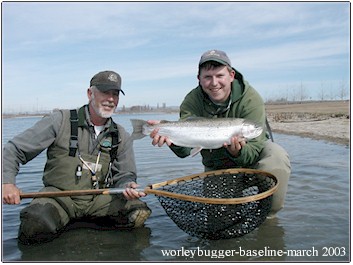 |
The upper
sections above the confluence of the
Teanaway River are low and clear and have
been for several days now.
This section of
river is always an option for bank or wading
anglers during spring run-offs. Access
to this section of the river is good with
several areas of fishing potential.
As conditions improve,
Skwala Stones will continue to entice trout to the
surface through the remainder of the month.
Most years, the first
parts of April still provide us with plenty of
stonefly activity.
|
|
Baseline Lake Rainbow |
|
|
Blue Wings are also sporadically appearing during the day. A
light breeze has been kicking up in the afternoons which tends to
slow the rivers Blue Wing activity. This weekend watch the
tail-outs and slower pools for slurping fish. Small sporadic
blooms of spring Caddis have also been appearing. |
|
|
Our March Brown Mayfly season is just around
the corner! Their hasn't been an emergence activity that
we have witnessed yet, but they could start appearing any day
now.
With the majority of our run-off completed
for the year, this spring should provide us with some great
afternoon match the mayfly fishing.
As the Yakima recovers from it's annual
spring run-off various other fisheries around the state are
providing fly fishermen with plenty of fishing action.
Rocky Ford Creek, a spring creek north of Moses Lake is
producing good daily Baetis activity.
|
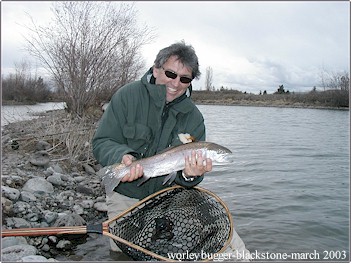 |
|
Blackstone Lake |
|
|
The Basin lakes are
also generating plenty of aquatic insect
activity as Midges take precedence in most
still-waters now. However, damsel fly
nymphs have started migrating and are showing up
in large numbers in some of the lower basin
lakes (Baseline Lake) at this time. |
|
|
|
|
The moisture continues
to pound the Cascades as well as the surrounding
foothills of the Kittitas Valley as rain showers
drive the river volume up once again. Water
clarity and conditions are dismal at this stage.
With extended weather predictions calling for
further rain and high mountain snows, conditions are
going to get worse before they get better.
As we deal with the
yearly spring weather and the uncontrollable nature
of the river, plenty of good fishing is still
available. The warmer night and day time
temperatures haven't done much for the rivers,
however the still-waters are beginning to heat up |
|
|
Reports over the
past several days have been good from anglers
fishing the basin lakes. Lenice, Nunnally
and Lake Lenore have been producing good
chiromomid hatches during the day. For
some, this type of fishing can be frustrating
and monotonous. However, when good hatches
occur you can find yourself having a pretty good
time. The
private lakes are fishing equally well
with far less crowds of anglers. |
|
|
|
|
As a series of late
winter storms moves across the state, rain showers
during the middle of the week caused a slight
increase in water volumes throughout the main stem
of the Yakima. With the air temperature
steadily dropping off, the moisture quickly turned
to snow as the Kittitas Valley received a light
dusting over night. The Cascades have received
a dose of much needed snow pack! |
|
|
Day time highs are
expected to reach the high 40's or low 50's over the
weekend. If predictions ring true, the snow
won't be around long. As of today the river is
still in good condition with plenty of visibility.
The lower canyon has a tint of color due to swelling
of Wilson Creek and surrounding tributaries after
Wednesday's rainfall. |
|
|
This Saturday, March
8th, John Nolan a representative of Hyde Drift
Boats will be presenting a clinic on
"How To Row A Drift Boat" at the Worley
Bugger fly shop in Ellensburg. The clinic
is free and open to the public. If you
would like to attend, please call the proshop
and we will add your name to the list of
participants. |
|
|
|
|
With the sun shining
bright warm ray's this past week over Central
Washington, water temperatures climbed into the
middle forty's and the the
Skawla Stone have drawn the attentions of
our resident rainbows. Stonefly nymphs have
congregate in masses along the banks of the river.
Each rock you turn over
exposes several of these sub-aquatic creatures.
Good stonefly activity is showing up throughout the
lower portion of the Yakima, from the river sections
of Thrope to the lower Yakima River Canyon.
Fly fishermen converged on the river this past
weekend casting dry fly imitations with much
success. |
|
|
The river continues
to recede each day after last week's heavy
rainfall, dropping a few hundred cfs each day.
As the water volume continues to drop, water
temps will increase creating more stonefly and
mayfly movement. This weekend also
produced some Baetis activity, however at this
point the trout's attentions seem clearly
focused on the larger of the two meals. |
|
|
This Saturday the
basin's desert lakes opened for the season and
crowds of people headed east for the opener.
The private fisheries of
Blackstone and
Baseline lake have also re-opened for the
spring fishing season. Dates are quickly
beginning to fill. |
|
|
Congratulations goes
out to the board members of the "YRFF"
for the outstanding job and they have done
constructing the foundation of the Central
Washington Federation of Fly Fishers club.
A banquet and auction was held this past
Saturday at the Ellensburg Inn after a morning
clean-up in the Yakima Canyon. Both were a
success and the club is off to a great start! |
|
|
|
|
As a inch and a half of
rain fell over the Kittitas Valley late Friday
night, more of the winter snow pack was diminished,
rocketing water flows by early Saturday morning.
The Yakima indigested water from some of it's larger
tributaries such as the Teanaway River as more of
the winter snow levels melted away. Water
volumes quickly doubled producing poor water clarity
and conditions for weekend fly fishermen. Cold
pre-spring nights and sunny days have quickly taken
care of the problem, as the water flows makes a
rapid descent. |
|
|
Night time
temperatures dropping into the low 20's have
help the river make a quick resurgence.
Water clarity and conditions have returned,
however the river flows are still on the drop.
With increased water volumes, water temperatures
have dropped as well. What will this do to
the Skawala adult and Blue Wing dry-fly activity
we were seeing last week. Most likely slow
it a bit for a day or two until warmer water
temperatures develop. Day time
temperatures are predicted to reach the mid 40's
as night time temps continue on the cool side.
The nymph and streamer fishing should continue
to be productive throughout the afternoon.
Expect sporadic dry fly activity throughout
specific sections of water where fish have
already been activity taking these imitations on
the surface. |
|
|
"The Fly fishing
Show" this weekend in Bellevue had a unexpected
turn out, with crowds of fly fishermen strolling
the aisle on Saturday and Sunday. It was
great to see everyone out. Thanks for
attending and stopping by the booth. |
|
|
|
|
It's that time of the
year again as the exciting spring hatches get under
way. Despite cool water temperatures, Skwalla
Stones are flying! The past couple of days
specific area's of the canyon and upper sections
through town have been producing adult activity.
The trout are looking up through some of these
area's, taking the dry fly imitations. The
stone nymphs at this point are highly productive to
fish as we enter the beginning stages of the
stonefly hatch. Along with Skwalla Stones,
Baetis Mayflies are also in the beginning stages. |
|
|
Sporadic hatches the
past couple of days through these area's as well
have been occurring. Due to last months
unusual heavy rain showers, the majority of the
low lying snow pack from the foothills has
disappeared. This spring should produce
some great spring fishing days throughout the
central basin. |
|
|
Is it good timing?
We aren't sure, but this weekend "The Fly
Fishing Show" in Bellevue will take place.
Worley Bugger Fly Co. will be attending
answering questions about this year's fly
fishing season on the
Yakima,
Klickitat,
Blackstone and
Baseline Lakes and our scheduled June trip
to the waters of southwest
Montana! For those looking to book a
fly fishing adventure with us this spring,
receive 10% off if you do so at the show! |
|
|
|
|
The cold winter nights
have continued to dominate the Yakima River valley
as the water flows continue to recede after last
weeks flood conditions. With a mixture of cold
night time lows and the added volume of flow, water
temperatures are hovering in the upper 30's, at best
reaching the 40° degree mark during the warmest
parts of the day. You may find slightly warmer
water in the lower Yakima River Canyon. |
|
|
With the continual
drop in volume, slight changes in water
temperatures will unearth the adult Skwala
stones that have amassed once again along the
banks of the Yakima. As we begin to see a
consistent temperature in the lower 40's, the
first stonefly hatch of the new season will
begin. The warmer sunny day's we are
experiencing are certainly going to help speed
the process. A mixture of rainbows and
whitefish can be found in the slower pools and
tail-outs of the runs sporadically sipping
Midges during the afternoon. Stonefly
nymphs and small bead trailers will most likely
be your best combinations. You may find
some rewards fishing streamer or sculpin
imitation on a slow mending swing. This weekend
concentrate your efforts in these area's of the
river and you will find success. |
|
|
|
|
Upon reaching flood
stage conditions this time last week, dry weather
the past several days has prevented the Yakima from
leaving it's banks any further. Dramatic
reductions in water flows throughout the main stem
of the river have occurred as bright sunny skies
converge over the Kittitas Valley. Water
clarity has returned, however the Teanaway River, a
main tributary of the Yakima continues to flow at
higher levels. |
|
|
Due to this fact, we
are experiencing higher water flows here in the
lower valley. Those of you that wade
fished the river heartily in January will find
access to some area's much more difficult now.
The upper reaches of the Yakima above the
Teanaway is currently running about 1/2 the
water volume of the lower river. Cold
February nights along with high volumes of water
equal (=) low water temp's. Afternoon
fishing the past couple of days has been best.
As the days begins to cool, so does the fishing. |
|
|
|
|
After an series of
Sunday night rain showers mixed with warming winter
temperatures, snow accumulations in the low lying
valley quickly turned the Yakima's tributaries into
a funnel for some early season run-off. Water
conditions were compromised quite quickly as water
flows tripled in volume throughout the main stem.
A resurgence is now taking place as water conditions
and flows are dropping off quickly. |
|
|
As of yesterday,
water clarity was returning and the river is
fishable. However, the extended
weather forecast calls for more rain and snow
showers over the next several days. This could
quickly change water conditions. Those of
you interested in fishing the Yakima should
watch the gauging stations closely. You
can also call the pro-shop for current weather
and water conditions. |
|
|
|
|
As the month of January
quickly ticks away, winter has yet to release it
grasp over Central Washington. The past two
days winter storms have dumped several inches of
fresh new powder into the Yakima River Valley.
Most days, thick low lying fog covers the hillsides
during the early morning hours. The winter
sunshine struggles to pierce the dense cover as the
mountains provide an fortress for this winter time
weather. |
|
|
Despite the lack of
sunshine, anglers descended on the Yakima this
past weekend in search of some winter season
trout fishing. Most were successful in
finding a few fish from early Monday morning
phone calls and reports. However, absurd
numbers of fish reported being caught drove
everyone's anticipation of winter fishing on the
Yakima into over drive. Being realistic
and hopeful go hand in hand in our sport.
Our philosophy at the Worley Bugger is quality,
not the quantity. The day spent on the water
enjoying the river, fish and surroundings is
what makes a person appreciate fishing with a
fly. If your worried about the numbers of
fish you catch in a day your probably
participating in the wrong sport! |
|
|
Regardless of the
weather, it's that time of year once again and
the trout's attentions are turning to Skwala
nymphs that are now migrating from river to
bank. Fish are moving taking up feeding
lies where these small stones can easily be feed
upon. It won't be until February before we
begin to see any adult movements, but over the
next couple of weeks trout will steadily be
feasting on this anticipated yearly event.
Midges will become less and less important when
a bigger meal is readily available, however
midges clustering on overcast days in February
can provide you will some exciting fishing
opportunities. February will also mark the
return of Baetis Mayflies to the Yakima. |
|
|
The "Yakima
River Fly Fishers Club" I am happy to
report is building a membership quite quickly.
General meetings for club members has yet to be
held, however committee officers have been
meeting a couple of times a month organizing and
building the foundation of the club. If
you have yet to hear anything about, don't worry
a website is in the works along with a host of
other information. A spring education and
auction event is being planned and organized.
When the final details come together we will
pass on the information. |
|
|
|
|
As residents of the
Kittitas valley ushered in the new year, snow
accumulations fell throughout the night. The
strong winter storm continued through the first day
of the new year and when it subsided, a total of 6-8
inches of snow had covered the surrounding hillsides
and city of Ellensburg. Areas of the upper
Yakima, Thorpe and city sections received a thick
blanket along the river. |
|
|
The hills and ridges
of the lower Yakima canyon drew little attention
from the winter storm and received only a light
dusting. Elk, Deer and Big Horn Sheep are
plentiful this time of year as they forage on
the winter grasses of the canyon. A mere
40 miles to the south, the town of Yakima still
looks like the last days of autumn. Leaves
that turned and died in October have yet to fall
from the branches of the trees. Winter has
yet to touch this section of the state. |
|
|
The following day
warmer temperatures mixed with a winter rain
shower started the melting process. The
new snow that had formed along the banks and
fields of the Yakima a mere 24 hours earlier,
began to dissipate. As more rain fell, the
snow pack melted quickly from the banks as sand
and silt were mixed to form a winter time
concoction. Flows throughout the river
started to climb. The city sections above
Wilson Creek, held it's visibility while
sections below this tributary, a small feeding
irrigation stream at the mouth of the Yakima
Canyon became chalky. Water runoff from
fields adjacent to this irrigation channel began
depositing water. Flows accelerated rapidly and
the river quickly took on a whole new look
The white churning waters of the Yakima gave
only a few feet of visibility and reminded me of
the Klickitat on a hot July day. |
|
|
As the days have
progress water clarity, flows and weather
conditions have steadily improved. Many of
the winter diehards have been out, fishing
during the early afternoon. An occasional
Midge hatch will occur and trout are
feeding. Those unable to fish a tiny dry fly
have entrusted a wet fly imitation to insure
their success. Nymph and streamer patterns have
been effective for most.
|
|
|
As winter steelhead
returns look bleak and west river closures are
eminent, mild temperatures are ideal for those
looking for some winter fishing on Central
Washington's Yakima River. Just a few
short weeks and the mass Skwala stone migration
will begin. The trout's attentions will turn
from the tiny insect offerings of January to the
protein rich nutrients of these plentiful early
spring stonefly nymphs. |
|
|
|
|
After a series of
erratic winter storms, which produced an inordinate
amount of rain showers, the waters of Central
Washington's Yakima River have settled and steadily
dropped back into winter flows. Small
tributaries that feed the Yakima as it channels its
way through the Kittitas Valley caused an increase
in water this past week. |
|
|
However, unlike the
anadromous fish producing rivers west of the
Cascades that swell at the banks due to heavy
rains this time of year, the Yakima rivers water
clarity is rarely compromised during the winter
months. The river is gin clear, cold and
inhabited by only a few die hard fly fishermen.
As Big Horn Sheep, Whitetail Deer and Rocky
Mountain Elk roam the hillsides of the Yakima
Canyon, Bald Eagles, America's symbol of
strength, honor and perseverance stand guard
atop the branches of cottonwoods that line the
banks of the river. |
|
|
The fishing this
time of year is what you make of it. The
warmer days where air and water temperature mix
to the right degree have produced willing
feeding participants. Some days the
river's wild rainbows aggressively slash at
nymphs and streamer patterns. An
occasional midge slurping rainbow can be found
among the foam lines and boulders of the river
as well. The colder winter days you work a
bit harder and feeding becomes less frequent or
not as easily detected. Whitefish
congregate in pods this time of year with the
Yakima's rainbows and at times can be a more
aggressive feeder than it's spotted brethren.
It's a peaceful, quiet time of the year to stand
in it's water's. |
|
|
As the nation sits
under a blanket of uncertainty this holiday
season, the staff, management and professional
guide staff of Worley Bugger Fly Co. wish
everyone a happy and peaceful Christmas season.
We thank everyone for their continued support of
our efforts and look forward to the upcoming new
season. |
|
|
|
|
As the month of
December settles in, winter like weather
attempts to grasp the Yakima River Valley.
The first low lying snow fall arrived late last
week, but by now signs of the event have quickly
disappeared. Only the surrounding
hillsides remain blanketed with the evidence of
a December storm. |
|
|
If current weather
predictions hold, the Kittitas Valley should see
more pre-Christmas snow by the middle of the
week.
Low lying fog
hovers in the the hills and along the river most
of the day, blocking the warm sun from the
Central Washington basin.
|
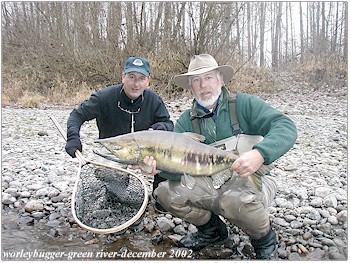 |
This leaves a 5 to 6 hour window of opportunity to experience
some quality winter river fishing. Their is no necessity
to be on the river at first light.
Give the sun a
chance to bring the temperature up and you can
avoid breaking ice from your guides most of the
day. |
|
Green River Chum Salmon |
|
|
|
This time of year as
the colder weather sets in, concentrate your
best efforts during the warmest parts of the
day. It is during these times fish are
most active. A couple of degrees
difference in water and air temperature can make
the difference between inactivity and fish
willing to feed. |
|
|
|

|
|