|
|
The Klickitat River, located in Southeastern Washington is one of the state’s longest free flowing rivers, stretching approximately 100 miles from its glacial source to the mouth of the Columbia River.
The Klickitat River originates from numerous small tributaries that course from the rugged, jagged, snow capped peaks of Mount Adams, a 12, 276-ft. active volcano.
|
|
|
|
DUE TO THE LOW NUMBERS OF RETURNING STEELHEAD TO THE ENTIRE COLUMBIA RIVER SYSTEM IN THE 2023 SEASON, WBFC HAS DECIDED TO FORGO ANY AND ALL GUIDED FLY FISHING TRIPS ON THE KLICKITAT RIVER, UNTIL LARGER RETURNS OF FISH
HAVE ENTERED THE RIVER SYSTEM. PLEASE CONTACT US WITH ANY QUESTIONS YOU MAY HAVE. THANK YOU FOR YOUR INTEREST. |
|
This renowned Pacific Northwest steelhead and salmon stream gains momentum quickly, dropping approximately 5000 feet in total elevation by the time it reaches the confluence of the Columbia River. The
rapid, swift gradient, glacier fed currents of this river over millions of years has cut its way through deep basalt canyon walls, crafting amazing beauty and perfect habitat for the Pacific Northwest
Steelhead.
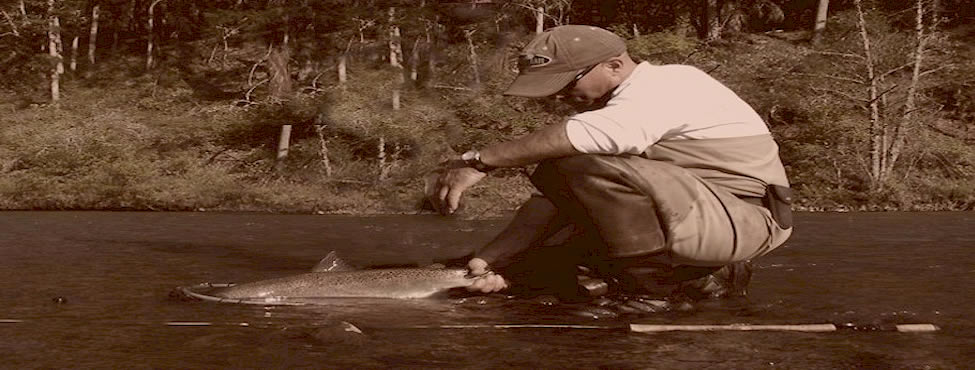
Like no other place I have ever seen, age old rugged oak, fur and alder trees cover hillsides of this steep river gorge, creating a unique and beautiful environment for a day of fly fishing. On its decent to the Columbia, the Klickitat tumbles over massive boulders, slices through narrow substratum chutes, and weaves around log-jams and other natural river obstacles. A mile upstream from the small community of Lyle, the Klickitat narrows into a torrent chute where salmon and steelhead strain against the strong currents of the river, dodging boulders and other obstruction to journey upriver. Even today Native Americans dip net for salmon and steelhead from rickety leaning scaffolds assembled along the cliff face walls perched high above the rapids as these resilient fish make their arduous trek up river to their spawning grounds.
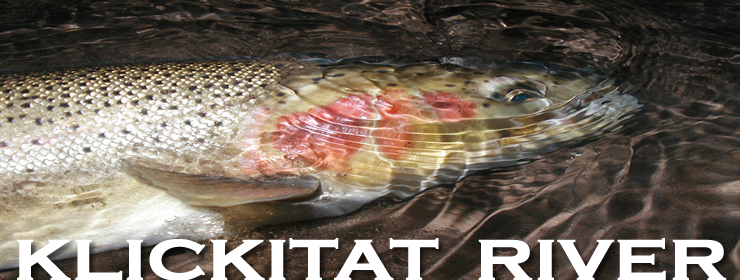
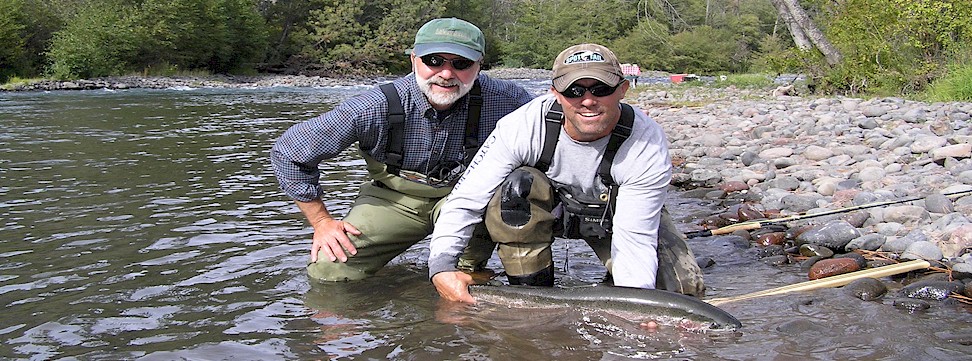
This beautiful Southeastern Washington River supports healthy runs of Chinook Salmon (King), Silver Salmon (Coho) and the Pacific Northwest Steelhead. Strains of both hatchery and wild steelhead return to the "Klick" each year and proliferate throughout the system during the fishing season.
The Klickitat River is also known for its spectacular, vivid scenery and abundant wildlife that roam the hillsides and banks of the river. Its not uncommon during your day of fishing to observe a diverse variety of game species. Throughout most areas of the river, Mule deer and wild turkeys wander the hillsides of the Klickitat Canyon. |
|
|
|
The
Klickitat River is also known for its spectacular, vivid scenery and
abundant wildlife that roam the hillsides and banks of the river.
Its not uncommon during your day of fishing to observe a diverse
variety of game species. Throughout most areas of the river, Mule
deer and wild turkeys wander the hillsides of the Klickitat Canyon.
Other sections provide ideal habitat for
visiting elk herds and curious black bears.
Elusive cougars wander the rocky ridges
along the canyon walls. Timber Rattlers are
prevalent to the Klickitat River Basin and
one should always be aware when walking and
fishing the banks of the river.The upper reaches of the Klickitat River
serve as nesting sites for several birds of
prey which include; Red Tail Hawks, Ospreys
and Bald Eagles. These strong, symbols of
our great country, once on the edge of
extinction have adapted well to the area.
During the course of the year these large
birds of prey thrive on the nutritional
contents of decomposing salmon carcasses.
Perhaps,
the most remote and picturesque sections of river wilderness lie in
the upper reaches of the Klickitat Basin. From the small mountain
tributary of Summit Creek down river approximately 20 river miles to
the boat launch at "Slide-out". These upper reaches of the Klickitat
River are unburdened from human civilization. The peaceful
surroundings here is nature at its best---one hears nothing but the
forceful descent of water plunging over rocks and the pleasant
sounds of wild life.
The
summer run steelhead season begins each year on the first day of
June. Steve Worley and members of his elite team of guiding
professionals at Worley Bugger Fly Co. will be conducting fly
fishing trips on the Klickitat River during the premier months. Each
year, populations of both wild and hatchery run anadromous fish
return to the Klickitat system. |
|
|
|
The
Klickitat River provides passage for a variety of native anadromous
fish, predominantly spring and fall runs of Chinook Salmon, as well
as a small number of Coho Salmon (also known as "Silvers"). The
river also experiences a strong run of both wild and hatchery
Steelhead. Over the years, the river has become renowned for the
vast numbers of returning fish and the amazing size of these salmon
and steelhead. It is not uncommon for one to catch a King salmon
over 30 pounds. In fact, many anglers claim they have caught some of
these "kings of the river" up to 60 pounds. Catching wild steelhead
in the Fall over 12 pounds is not uncommon, while early hatchery
summer run Steelhead exceeding 20 lbs are caught each and every
year.
Like we
had previously mentioned, the Klickitat's main source of water is
supplied by the melting glacier of Mount Adam's as well as small
flowing tributaries that fuel the streams rapid gradient flows as it
makes it way to the Columbia River. During periods of warm weather,
melting snow and ice from the glacier will increase. The water
clarity will quickly turn and produce an opaque white color.
When
this occurs steelhead use these river conditions to their advantage.
They move from the deeper, darker runs of the Klickitat and begin
holding in shallower waters. It is during these periods that
steelhead feel safe and secure and can easily be targeted with
flies. While others have left the river for the summer opting for
clearer water conditions to return, we fish with tremendous
successes.
If the
valley experiences a sudden rain shower and this precipitation
touches on a portion of the Klickitat feed glacier most often the
water will become chocked with sand and silt. The result generally
isn't good. The river will rise quickly in height and flow and water
clarity will be compromised as mud flows become prevalent. During
these periods we have no confidence in the fish or the fishing and
we will wait until conditions improve. |
|
|
|
A
variety of fly fishing tactics are effective for "hooking up" with a
Klickitat River Steelhead throughout the year. Swinging flies is by
far the preferred method of catching these rainbows of the river,
however it is not always the most productive. The Klickitat offers
everyone a diverse challenge with unique and exciting runs. Some are
good for swinging a fly, while others are better suited for dead drifting
steelhead nymphs. We have several distinct strategies that produce
results time and time again. These are strong, aggressive fish so so
we encourage our guest to keep an open mind and be prepared to fish
for Klickitat Steelhead in a variety of fun and exciting challenges.
Spey
fishing with two handed fly rods up to 16' is becoming increasable
popular each and every year. Spey rods can be used on the river,
however they are not necessary and in some cases over kill. A nine
to nine and 1/2- seven or eight weight fly rod with floating line is
generally adequate gear for fishing the "Klick".
It is
usually good to have several varieties and densities of sinking tips
in appropriate lengths as well. If you do prefer a two hander, a
shorter length usually in the 12 foot range is sufficient for the
Klickitat. Switch rods are the preferred method of fishing the
upper river and our guides are very proficient in there use.
We are happy to teach you this fun and productive method of catching
steelhead for during the day.
If you
would like to experience this incredible river for yourself or have
any questions about our guided fly fishing please feel free to
contact us. Our professional guiding services are very popular and
highly respected and dates for the Klickitat River Steelhead season
begin filling quickly each year. |
|
| |